TEHRAN, Feb 14: When protests in Iran were spreading nationwide last month, authorities imposed a sweeping internet shutdown that disrupted everything from online commerce to everyday communication.
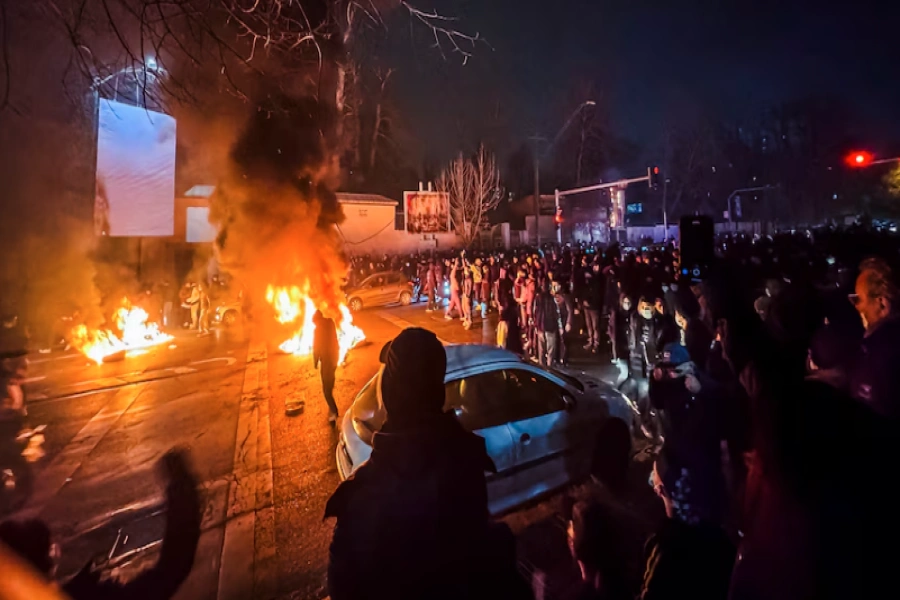
The blackout began on the evening of January 8 following widespread online calls for mass anti-government protests after nearly two weeks of smaller demonstrations motivated by cost-of-living concerns.
Officials say more than 3,000 people ultimately died during the protests, while international organisations have reported significantly higher figures.
- What is the internet status in Iran? -
More than a month after the shutdown was imposed, Iranians are now generally able to get online, though virtual private networks (VPNs) -- widely used to circumvent pre-existing blocks on popular sites -- are only intermittently available, and web traffic is heavily filtered.
The internet blackout began gradually easing 10 days after it was first imposed, but as of February 1, it still had not returned to pre-shutdown conditions, according to telecommunications minister Sattar Hashemi.
Even before the blackout, access in Iran was heavily restricted, with many social media platforms blocked, requiring the use of a VPN.
But the January 8 shutdown went further, blocking most VPNs, disrupting Starlink satellite internet connections -- officially banned in Iran -- and leaving only the country's internal intranet operational.
Internet and user security

Launched in 2016, the intranet supports domestic applications and local websites, and was built to maintain data security and essential services independently of the global internet, according to the official IRNA news agency.
By January 18, authorities had begun allowing limited access to Google and email services, with a so-called "white list" of permitted websites gradually expanding.
Many VPNs eventually became usable again, but their availability changes from day to day, and hiccups in service are frequent.
NetBlocks, which monitors global internet connectivity, said Iran's internet access "remains heavily filtered," adding that "white listing and intermittent connectivity continue to limit Iranians' contact with the outside world", according to a January 30 post on X.
- What is the impact on the economy? -
Iran's already battered economy took another severe blow thanks to the shutdown.
The digital economy suffered daily losses of nearly $3 million, while the broader economy incurred estimated losses of $35 million per day, according to Hashemi.
He warned that the continued disruption could also have "social and security consequences".
Amir Rashidi, digital rights director with the US-based Miaan group, believes that keeping the internet restricted would be "technically possible", but it "creates cumulative pressure -- economic inefficiency, capital flight, and social dissatisfaction".
Authorities have in recent weeks received multiple requests from companies in Iran demanding access to the global internet, the lifting of filters and compensation for damages, according to local media.
Entrepreneur Amir-Reza, who runs a website selling digital products, said his business had yet to recover.
"The internet shutdown coupled with fluctuations in the exchange rate have caused us losses of at least 100 million tomans ($800) per day," said the 26-year-old, who like others interviewed by AFP asked to be identified only by his first name.
- How is it affecting daily life? -
The easing of restrictions has made little difference for Iranians.
Yoga instructor Javaneh said she was only able to reconnect with the outside world in recent days but was still unable to upload videos for her audience.
"I could only contact people whose numbers I had during the shutdown," she said, adding that the disruption forced her to stop online classes and turn to in-person sessions.
Similarly, 29-year-old freelance translator Amin said the internet remained "very unstable", and even "paid VPNs get disconnected too often".
During and since his 2024 presidential campaign, President Masoud Pezeshkian has repeatedly vowed to push for easing internet restrictions, and he has recently called for the latest shutdown to be lifted.
Rashidi, the digital rights advocate, warned prolonged restrictions "risk alienating business communities, young professionals, and civil society actors".
Alma, a 26-year-old who owns an online business selling leather products, said she may have to migrate her operations to a domestic server.
"If I start calculating the financial losses, I might get a heart attack," she said.