Transparency International (TI) has once again underscored the weaknesses in Nepal’s governance through its latest Corruption Perceptions Index (CPI). Published annually, the index remains one of the most widely referenced global assessments of public sector corruption. The Corruption Perceptions Index 2025 paints a troubling picture of global politics and governance. On a scale where 100 denotes a corruption-free environment, the global average has slipped to 42—its lowest level in a decade. Of the more than 180 countries assessed, 122 scored below 50, signalling that the global fight against corruption is faltering rather than advancing. Most concerning is the decline recorded in democratic nations. TI warns that institutional checks and balances, along with effective law enforcement, are steadily weakening in many democracies. Democracy’s strength lies not merely in periodic elections but in the resilience of independent judiciaries, robust regulatory systems, free media, and active civil society. When these pillars erode, corruption risks intensify, private money exerts disproportionate influence over policymaking, and public trust deteriorates. The report notably highlights the United States, whose score has dropped to 64—its lowest ever. TI has expressed concern over efforts that target independent voices and undermine judicial independence. Cuts to international cooperation and foreign assistance have also weakened global anti-corruption initiatives. A decline in an established democracy such as the US—amid growing political polarisation—sends an unsettling message about broader democratic backsliding. Similar patterns are observed in the United Kingdom and France. Although these countries remain near the top of the rankings, legal loopholes, weak enforcement, political polarisation, and the expanding influence of private money pose long-term risks to democratic integrity.
NPL: Lumbini Lions set 171-run target for Pokhara Avengers

Amid this sobering global landscape, there are some encouraging examples. Denmark, with 80 points, has topped the index for the eighth consecutive year, demonstrating the effectiveness of institutional transparency and firm enforcement. Ukraine, scoring 36, has shown incremental progress through newly established anti-corruption bodies. TI notes that exposing corruption itself can signal institutional strengthening, especially when supported by an active civil society. In South Asia, Bhutan stands out with 71 points. Once regarded as trailing Nepal, Bhutan now exemplifies steady governance reform. Nepal, by contrast, remains stagnant at 34—unchanged from last year. Such “stability” offers little comfort. Persistently hovering below 35 reflects deep-rooted systemic weaknesses, entrenched impunity, and inadequate transparency. Corruption’s cost extends beyond financial losses; it erodes public services, distorts opportunities, and weakens citizens’ faith in justice and the state. The message for Nepal is unequivocal. Political commitment must translate into concrete action—strengthening digital transparency, ensuring openness in public procurement, empowering independent investigative bodies, and expediting judicial processes. Regulatory institutions must be insulated from political interference, and legal loopholes enabling illicit capital flight must be closed. Equally important is enhancing citizen participation and safeguarding the effective implementation of the right to information.
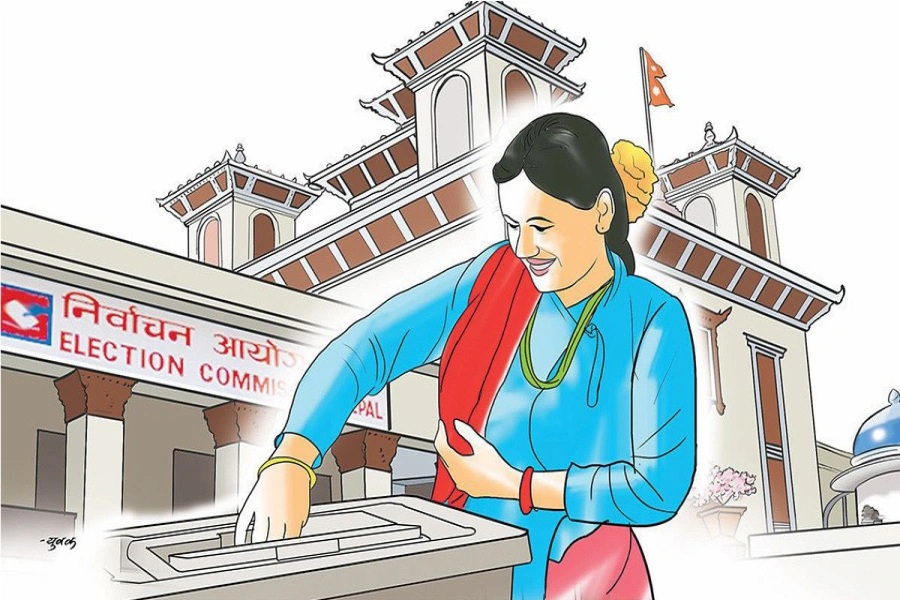
At a time when Gen Z and youth-led movements are demanding accountability and cleaner politics, the forthcoming elections carry added significance. The country needs leaders who are credible, untainted by corruption, and genuinely committed to reform. Only through such leadership can Nepal hope to make measurable progress in curbing corruption that has persisted for decades. Elected representatives must prioritise addressing core political, social, and economic challenges while remaining responsive to the aspirations of a generation calling for change. The link between democracy and good governance is no longer theoretical—it is firmly established. Beneath Nepal’s “stable score” lies a more fragile reality: declining public trust. Leadership must confront this honestly and urgently. The window for reform remains open, but time is narrowing. Without decisive action to strengthen institutional balance, uphold the rule of law, and deepen transparency, not only Nepal’s standing on global indices but the vitality of its democracy itself may be at risk. The moment for action is now; delay would be costly.