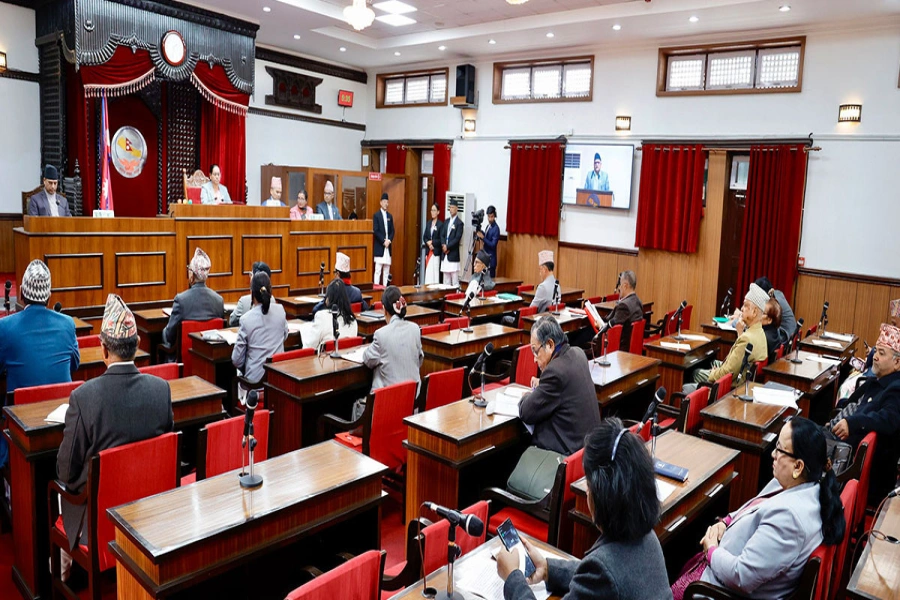
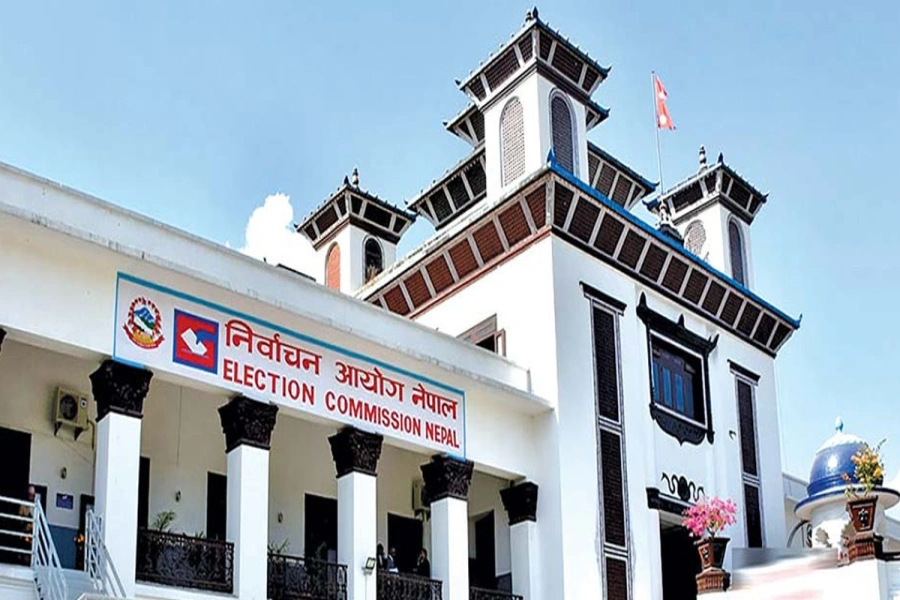
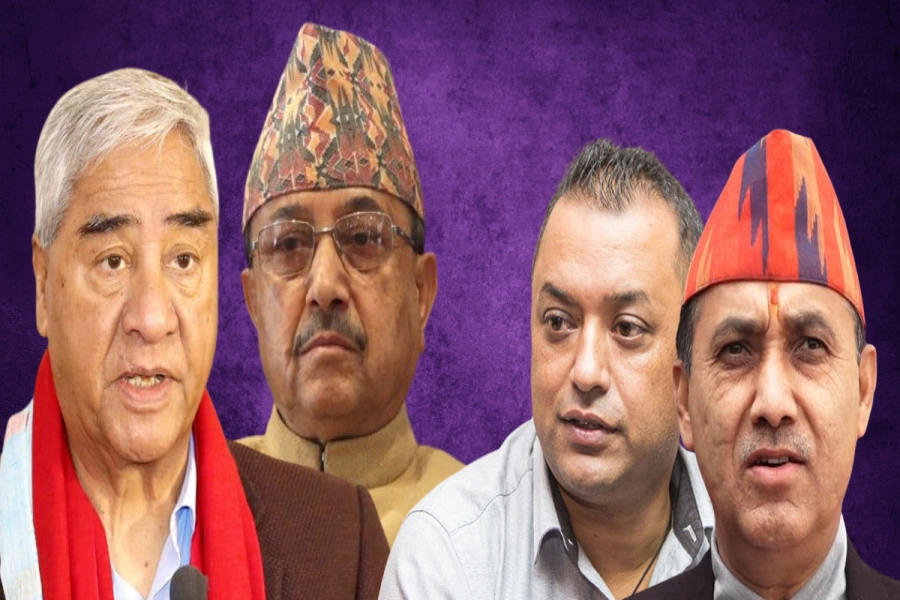
As the nation braces for elections, competition for voters’ attention is intensifying and, unsurprisingly, the cacophony generated by thousands of prospective legislators is growing louder by the day.
For many people, it may be tempting to tune out and passively follow the electoral noise without asking deeper questions. This would be a serious mistake. In a liberal and competitive electoral system like Nepal’s, blank “cheques” should never be handed to politicians—whether they are aspiring candidates or seasoned veterans of the political arena.
To be fair to voters, understanding what political parties vying for power intend to achieve if elected is a daunting challenge. Despite waves of social media posts by candidates, details about their personal convictions and official positions remain scarce, if not nonexistent. Political parties themselves traditionally do not formulate detailed manifestos, instead offering broad propositions that lack specifics. This is one of the weakest points of Nepal’s electoral democracy, and it is deeply problematic.
Unlike Nepal, Thailand’s Organic Act on Political Parties, under Section 57, compels political parties to disclose the financial details of any budget proposals made during elections. Making bold policy promises with financial implications without proper costing can even result in financial penalties. In Nepal, where no such stringent provisions exist, party manifestos typically list an abundance of grand projects with very few details. This has long been a defining feature of national politics and an almost default mode of operation for political parties.
Yet how can voters make informed decisions without access to key insights into candidates and their parties’ positions on Nepal’s most pressing policy challenges? From education and health care reform to economic revitalisation, anti-corruption efforts, climate and biodiversity protection, and the delivery of clean and effective public services—including public transportation—there is no shortage of complex issues that demand attention.
Seeking a deeper understanding of what candidates and parties stand for is a cornerstone of any functional democracy. Instead, voters often choose parties or candidates based on ideological labels, assumptions or personal characterisations that may be inaccurate.
At the same time, it must be acknowledged that for many citizens, forming opinions on policy issues can be cumbersome and complex. Some may simply lack interest in policy details or in assessing whether a candidate is truly fit to represent them. The process can feel boring or overwhelming—especially for those with limited access to information or those preoccupied with meeting basic economic needs. Given Nepal’s unequal social structure, deciphering a candidate’s intentions can be a luxury that not everyone can afford.
Pak embassy organizes poetry symposium — Aalmi Mushaira: Urdu,...

Encouraging citizens to educate themselves without addressing these realities risks becoming a tokenistic exercise. Yet neither should we underestimate people’s agency, wisdom and right to make informed choices when voting. To do so would risk sliding back toward exclusionary systems seen in the early days of liberal democracy or during some of the darkest periods of the twentieth century, such as apartheid-era South Africa or the segregated southern United States, where full political rights were denied to many.
Ways to test candidates’ suitability
Are there ways for voters to assess their options and reach reasoned conclusions about who deserves their vote? In the absence of recall mechanisms, the only formal check remains the next election. There is, of course, no guarantee that campaign promises will be honoured. Even competent and honest candidates may ultimately disappoint.
In a parliamentary system, politics is often dominated by powerful party leaders. Internal party manoeuvring has long constrained legislators with good ideas from achieving meaningful outcomes. For this reason, minimising the risk of voting for the “wrong” candidate is essential.
One possible approach is to develop a matrix of key criteria to assess whether a candidate is suitable for the office they seek. While not foolproof, such a framework could act as a compass to help voters evaluate a candidate’s integrity, competence and readiness for public office.
This approach may only be adopted by a minority of highly motivated citizens. Yet voting is both a civic right and a civic duty, one that every citizen—regardless of social or economic status—is entitled to exercise. This, ultimately, is the power that each voter holds.
Below are some benchmarks for what may be called a “Candidates’ Assessment Compass”:
Are personal interests placed first?
This is perhaps the most difficult element to assess. Does the candidate genuinely appear committed to the common good, or are they motivated primarily by self-interest? Have they contributed to community work? Do your instincts suggest authenticity rather than ambition alone? This relates to values such as honesty, integrity, humility and sincerity.
Does the candidate know your community?
Candidates who are not originally from a constituency deserve the benefit of the doubt, but they also bear a greater responsibility to demonstrate familiarity with local issues. Are they making a genuine effort to understand the problems of the communities they seek to represent?
Do they have the right credentials?
While impressive resumes often attract attention, formal qualifications should not be decisive. Citizens from informal sectors or with limited education may possess strong civic virtues and lived experience that make them equally—if not more—suited for public office.
Does the candidate have an opinion?
Candidates need not be subject-matter experts, but they should have informed opinions on key societal challenges. This requires a willingness to learn, listen to experts and engage with evidence, rather than relying solely on slogans.
Do they have concrete plans?
Strong candidates propose ideas that are feasible, actionable and roughly costed. The more detailed the proposal, the more likely the candidate has prepared seriously for the role they seek.
Will they remain accessible?
How will the candidate stay in touch with constituents once elected? Regular meetings, meaningful public updates and accessibility are vital for accountability.
Using the compass
While it may be unrealistic for citizens to formally interrogate candidates, collective action can help. Civic groups, neighbourhood associations and traditional institutions such as guthis can demand clarity from candidates. Local NGOs can also support marginalised communities in asserting their right to know more about those seeking to represent them.
Although parties shape electoral agendas, individual candidates still matter. Trust and accountability lie at the heart of the democratic social contract. Assessing candidates’ character, intentions and plans strengthens institutions and fosters inclusive, responsive governance.
Political systems do not become corrupt by default; they deteriorate when those in power pursue self-interest while pretending to serve the public good. Voters must do what they can to reject such politics.